Senate Control: 35 Seats, 13 Battlegrounds, and the Pacific Northwest's Role
Democrats need a net gain of four seats to reclaim the majority, a task that hinges on holding Alaska and winning key races in the Midwest and South.
By Kwame Montgomery ·
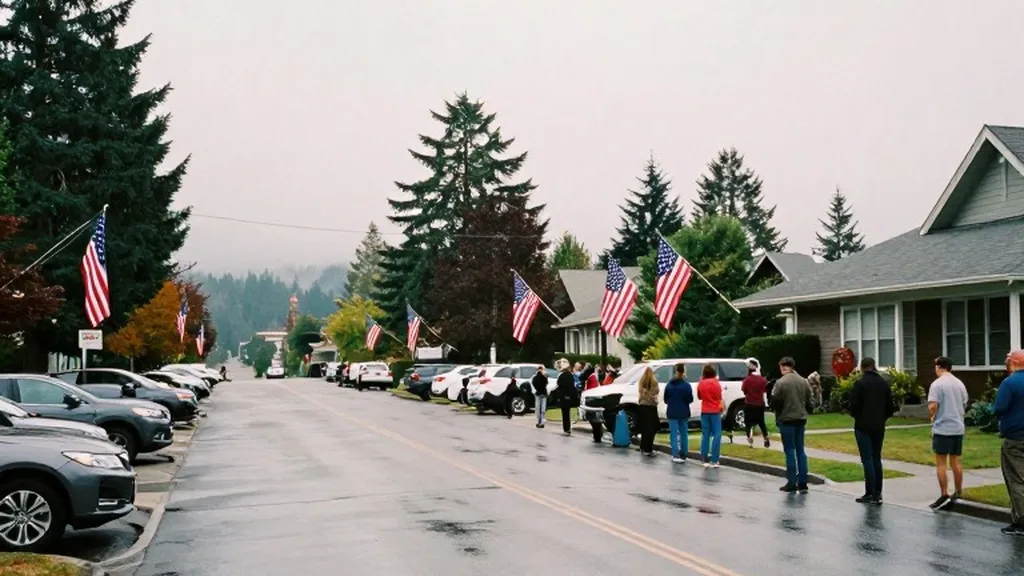
On this Election Day, voters are determining the balance of power in the United States Senate for the next six years. Thirty-five of the one hundred seats are up for grabs, including thirty-three regular elections and two special elections for the remainder of terms previously held by Marco Rubio and JD Vance. According to Ballotpedia, Republicans currently hold fifty-three seats, while Democrats hold forty-five, with two independents caucusing with the Democrats. To secure a majority, Democrats require a net gain of four seats, whereas Republicans can afford to lose only two. The stakes are high for the final two years of President Donald Trump's second term, as control of the Senate will dictate the pace of oversight and legislative action.
The Associated Press describes this election as a referendum on the current administration, with many voters expressing frustration over high prices and an unpopular war with Iran. Polling from AP-NORC indicates that thirty-five percent of U.S. adults approve of Trump's job performance, while only twenty-five percent approve of his handling of the economy. About seven in ten adults say the country is heading in the wrong direction, and most blame the president for the cost of living. This sentiment is driving voter engagement, with more than fifty-seven million people having already voted as of Monday, surpassing early vote totals from four years ago in many closely watched states.
Thirteen Senate races are considered battlegrounds, and their outcomes will likely determine which party controls the chamber. In the Pacific Northwest, the region faces distinct dynamics. In Alaska, incumbent Republican Dan Sullivan is defending his seat in a state that Trump won by thirteen point one percent in 2024. Race ratings from Cook, Decision Desk, Inside Elections, and Sabato classify Alaska as a toss-up or leaning Democratic. The Trump administration has even filed a lawsuit related to the certification of the Senate result in that state, adding a layer of legal complexity to the race.
Oregon presents a different scenario, with an open Senate seat and polls opening at 7 a.m. and closing at 8 p.m. local time. Unlike Alaska, the source facts do not list Oregon as one of the thirteen national battlegrounds, suggesting the race may be safer for one party or the other, though it remains a critical component of the regional landscape. Washington state has no Senate race on the ballot, with polls closing at 8 p.m., allowing voters there to focus on other down-ballot races. Idaho, with polls open from 8 a.m. to 8 p.m., is also not among the thirteen battlegrounds, though incumbent Republican Jim Risch is seeking reelection.
The other battlegrounds are spread across the country, with several in states Trump won by wide margins in 2024. In Kansas, a reliably Republican state, the race has become central to the fight for Senate control. Incumbent Roger Marshall faces a competitive challenge in a state where Trump won by sixteen point two percent. Ratings classify the race as a toss-up or leaning Republican. Similarly, in Alaska, the competitive nature of the race is driven by economic strain and tariffs, which the AP notes have made the state more volatile than expected.
In the Midwest, Michigan and Iowa offer opportunities for Democrats to pick up seats. In Michigan, the seat is open after Gary Peters retired, and the race is rated as a toss-up or leaning Democratic. In Iowa, the seat is also open following the retirement of Joni Ernst, and the race is classified as a toss-up or tilting Republican. These races are critical because Democrats need to win several of these competitive contests to reach the necessary net gain of four seats. The AP notes that one or two seats could tip the chamber, making every vote in these states essential.
Money has played a significant role in shaping the campaign landscape, with the 2026 elections likely to be the most expensive in history. Republican committees have outraised and outspent their Democratic counterparts, aided by Trump-affiliated groups and contributions from Elon Musk. However, at the candidate level, Democrats have outraised their opponents. An AP analysis of AdImpact data shows that eighty-eight point one percent of Republican general election TV ad spending went to states and districts Trump won in 2024, including more than eight hundred fifty million dollars in areas where he won by ten points or more. This spending strategy reflects an effort to protect vulnerable seats and consolidate support in strong Republican areas.
The mood among Democratic figures is characterized by cautious optimism. Suzan DelBene, Chair of the Democratic Congressional Campaign Committee, stated that the American people are angry and want change. She highlighted the cost of living and health care as key drivers of voter sentiment. In contrast, Republican National Committee Chair Joe Gruters emphasized the importance of turnout, stating that if they turn out their voters, they win. This contrast in messaging underscores the different strategies each party is employing to secure their goals in the Senate.
In the South, Georgia stands out as a potential flip for the Democrats. Incumbent Jon Ossoff is defending his seat in a state Trump won by two point two percent in 2024. The race is rated as leaning or likely Democratic, making it one of the most critical races for Democrats to secure a majority. In North Carolina, the race is open after Thom Tillis retired, and the contest is between Democratic former Governor Roy Cooper and Republican former RNC chair Michael Whatley. The AP notes that Tillis retired after clashing with Trump, which may have energized the Democratic base in the state.