36 Governor Races: The 18-18 Split and the Pacific Northwest
Voters in Washington, Oregon, Idaho, Alaska, and Hawaii decide the balance of power in a historic midterm where Democrats seek a majority of governorships.
By Claire Castillo ·
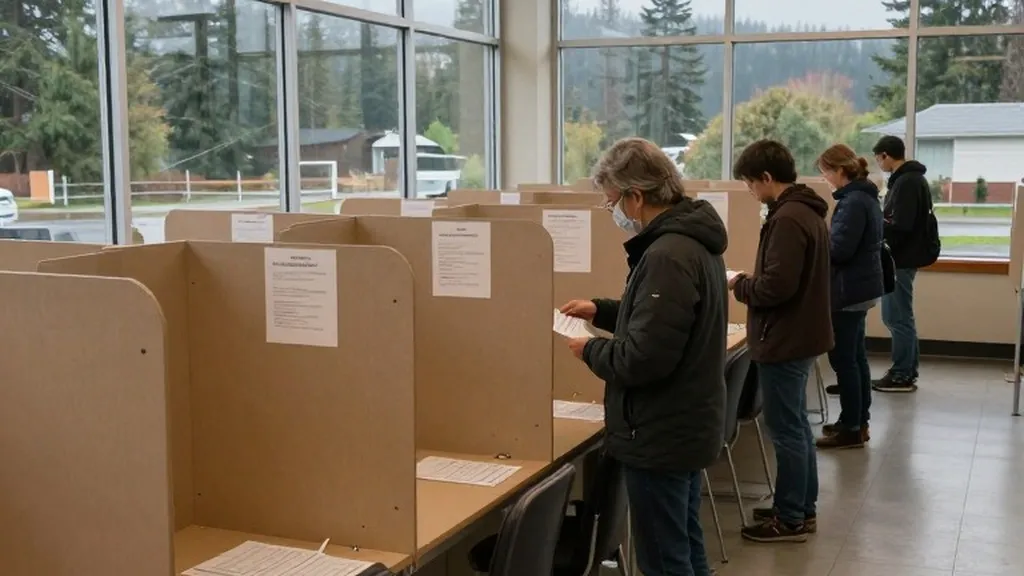
Voters across the United States are casting ballots on Tuesday, November 3, 2026, in a midterm election that serves as a referendum on President Donald Trump's second term. The Associated Press describes the day as a moment where Americans are struggling with high prices and are angry over an unpopular war with Iran. This election determines who controls Congress for the president's final two years, with all 435 House seats and 35 Senate seats at stake. However, the 36 governor races represent a critical component of the national balance of power, with the potential to shift control of statehouses from the Republican Party, which has held a majority since 2010.
According to Ballotpedia, the governor races are currently split evenly between the two major parties. Republicans hold 18 of the 36 offices on the ballot, while Democrats also hold 18. This parity means that Democrats need a net gain of just two governorships to secure a nationwide majority. Such an outcome would be significant, as the Democratic Party has not held a majority of governorships for two decades. The stakes are high because control of the governor's office often influences state policy on health care, cost of living, and infrastructure, issues that remain central to voter concerns.
Nineteen of these 36 races are open seats, meaning no incumbent is on the ballot. Ballotpedia notes that 15 governors are term-limited, preventing them from running again. Additionally, Iowa's Kim Reynolds, Minnesota's Tim Walz, and Wisconsin's Tony Evers chose not to run, while Rhode Island's Daniel McKee lost his primary. This large number of open seats creates uncertainty and opportunity for both parties. In the Pacific Northwest, this trend is visible, as voters in Oregon and Alaska are selecting new governors to replace departing officials.
In the Pacific Northwest, the election dynamics are particularly distinct. In Washington, polls are open until 8 p.m., and there is no governor race on the ballot this year. The state's election focuses on other contests, but the region's political mood is influenced by the broader national trends. In Oregon, polls are open from 7 a.m. to 8 p.m., and voters are deciding both a Senate race for an open seat and a governor race for an open seat. The dual nature of this ballot means Oregonians are determining the state's leadership in both the statehouse and the U.S. Capitol simultaneously.
Idaho presents a different scenario, with polls open from 8 a.m. to 8 p.m. Voters there are choosing between candidates for an open Senate seat held by incumbent Jim Risch and a governor race where incumbent Brad Little is running for re-election. The presence of an incumbent in the governor's race in Idaho contrasts with the open seats in neighboring Oregon and Alaska. In Alaska, polls are open from 7 a.m. to 8 p.m., and the state is deciding a Senate race with incumbent Dan S. Sullivan and an open governor race. The AP notes that the Trump administration has filed a lawsuit related to the certification of the Senate result in Alaska, adding a layer of legal complexity to the day's proceedings.
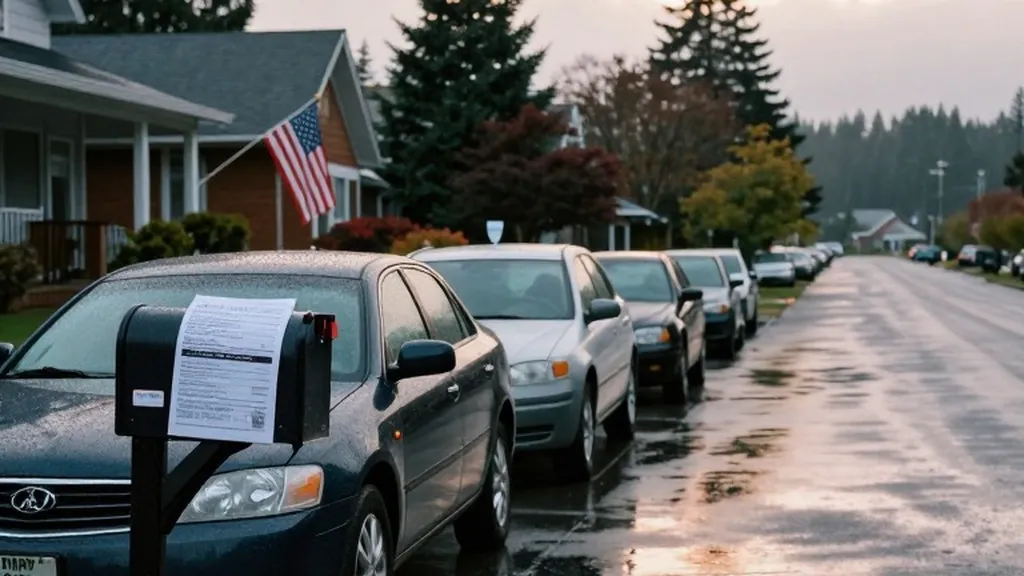
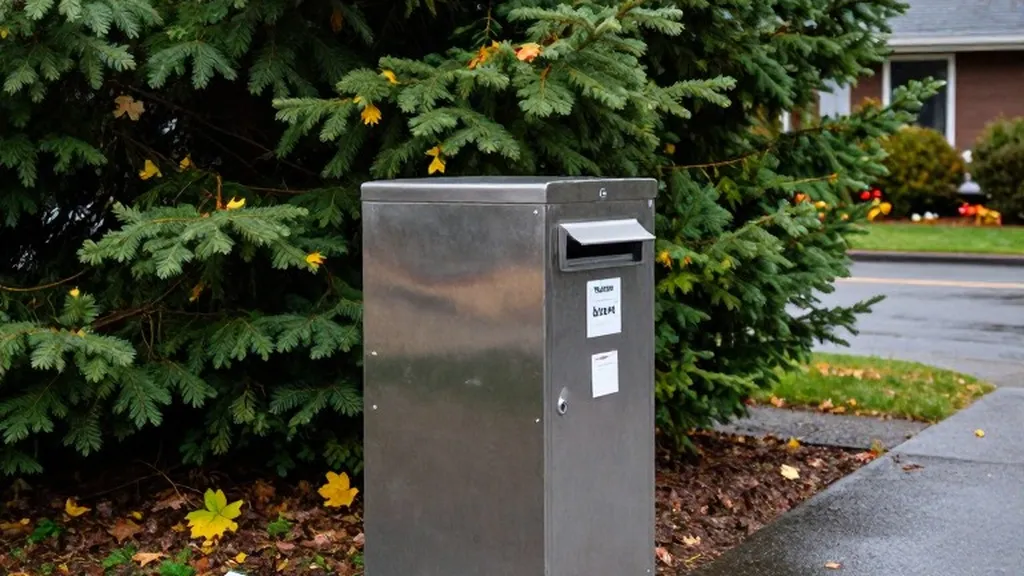
Hawaii completes the Pacific Northwest and Pacific region focus for this election, with polls open from 7 a.m. to 7 p.m. The state is deciding a governor race with incumbent Joshua Green. Hawaii does not have a Senate race on the ballot this year. The variety of poll hours across these states, from the 8 a.m. opening in Idaho to the 7 p.m. closing in Hawaii, reflects the logistical challenges of coordinating a nationwide election. The U.S. Postal Service has added hours, staff, and special lines to ensure that mail ballots are counted on time, a significant consideration given that many of these states, including Washington, Oregon, and Hawaii, rely heavily on mail voting.
The financial aspects of the 2026 elections are also notable, with the AP reporting that these are likely to be the most expensive in history. Republican committees have outraised and outspent Democratic committees, aided by Trump-affiliated groups and Elon Musk. However, at the candidate level, Democrats have outraised their opponents. This money edge for Republicans is viewed as an obstacle by Democratic strategists, who are also dealing with the impact of redistricting. Six states, including California, Florida, Missouri, North Carolina, Tennessee, and Texas, are using new congressional maps after mid-decade redistricting, and Ohio also uses a new map. These changes may affect the competitive nature of the races.
In the governor races, Democrats are defending five governorships in states that Trump won in 2024, including Arizona, Kansas, Michigan, Pennsylvania, and Wisconsin. Republicans are defending two governorships in states that Harris won, New Hampshire and Vermont. The AP identifies Alaska, Arizona, Georgia, Iowa, Kansas, Michigan, Nevada, Ohio, and Wisconsin as battlegrounds for the governor races. In Nevada, Republican Governor Joe Lombardo faces Democratic Attorney General Aaron Ford. In Ohio, Republican Vivek Ramaswamy is running against Democrat Amy Acton. These matchups illustrate the competitive nature of the races in key states.
The mood among voters is shaped by economic concerns, with the AP-NORC polling showing that 35% of U.S. adults approve of Trump's job performance and only 25% approve of his handling of the economy. About seven in 10 say the country is heading in the wrong direction. Many voters, like James Moore, a librarian in Raleigh, North Carolina, cite higher taxes and health care costs as primary drivers for their vote. Democrats are cautiously optimistic, with DCCC Chair Rep. Suzan DelBene stating that the American people are angry and want change. Republicans, led by RNC Chairman Joe Gruters, emphasize the importance of turnout, noting that if they turn out their voters, they will win.