Pacific Northwest voters weigh cost of living in record turnout
Over 57 million early votes have been cast as parties brace for a decisive turnout fight in key Western states.
By Chioma Rogers ·
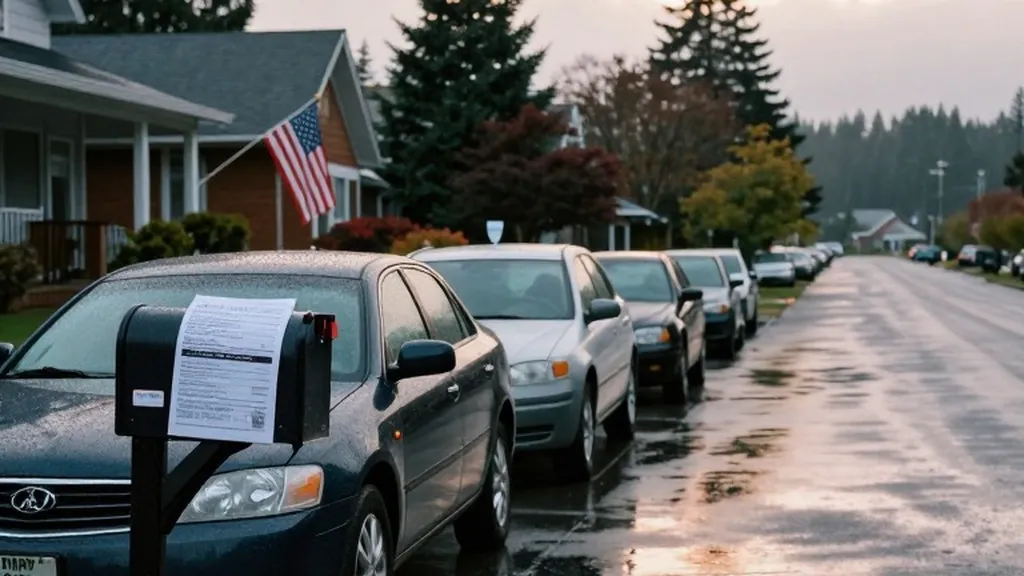
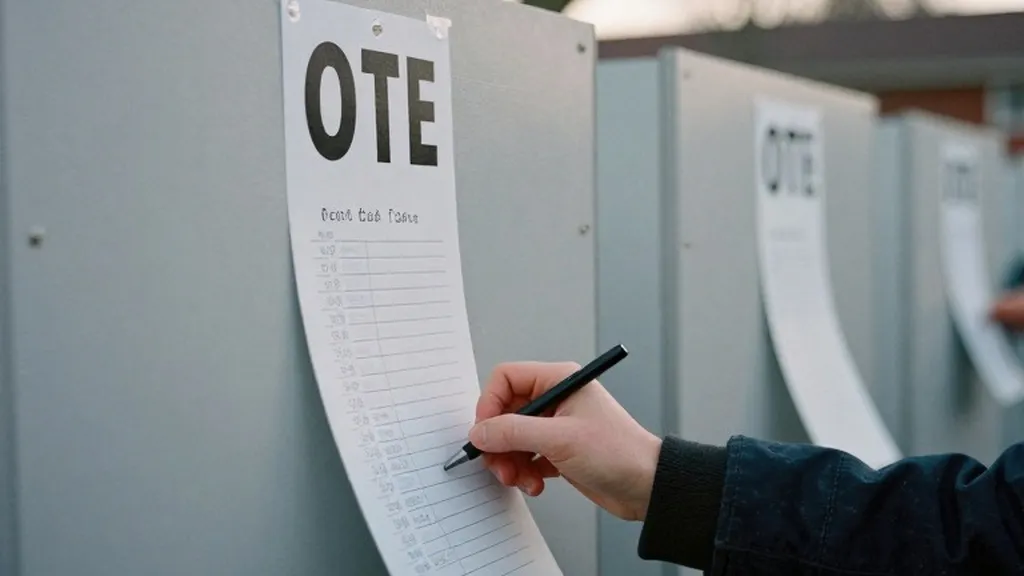
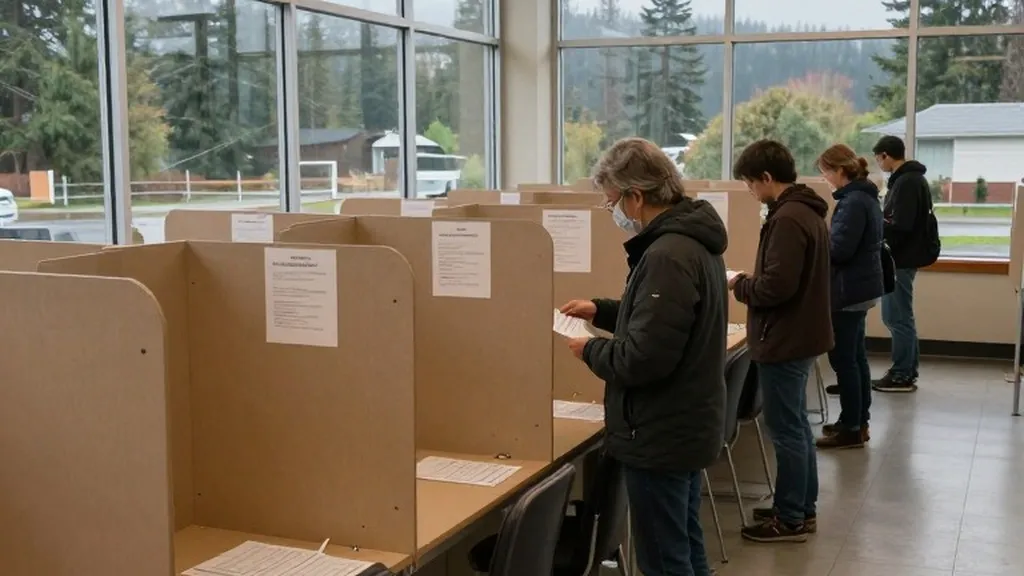
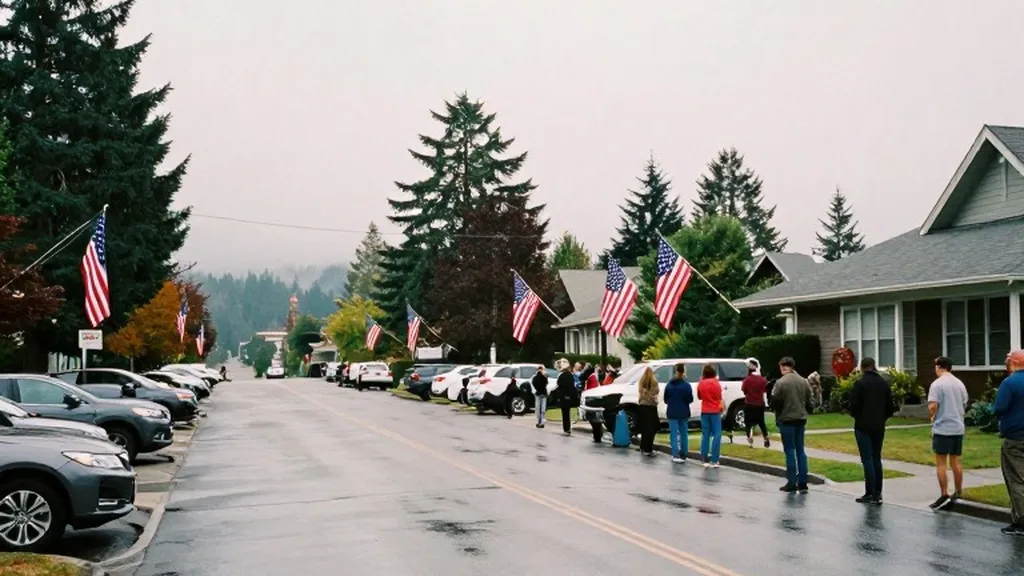
Voters across the Pacific Northwest are heading to the polls on Tuesday, November 3, 2026, in a midterm election that has drawn over 57 million early ballots. This figure surpasses the early voting totals from four years ago in many closely watched states, signaling high engagement as the nation decides the balance of power for the final two years of President Donald Trump's second term. In Washington, polls remain open until 8 p.m., and voters are casting ballots by mail or in person for House seats, as the state has no Senate or governor races this cycle. Oregon voters have access to polls from 7 a.m. to 8 p.m. for a competitive Senate race and a governor's race, both of which are open seats. Idaho polls are open from 8 a.m. to 8 p.m., where voters will decide the fate of incumbent Senate candidate Jim Risch and incumbent Governor Brad Little. In Alaska, polls open at 7 a.m. and close at 8 p.m. for a Senate race featuring incumbent Dan S. Sullivan and an open governor's seat. Hawaii polls are open from 7 a.m. to 7 p.m., where voters are choosing between incumbent Governor Joshua Green and his challengers, with no Senate race on the ballot.
The Associated Press describes the election as a referendum on the administration, with voters struggling with high prices and anger over an unpopular war with Iran. AP-NORC polling indicates that 35% of U.S. adults approve of President Trump's job performance, while 25% approve of his handling of the economy. Approximately seven in ten adults say the country is heading in the wrong direction, and most blame the president for high prices. This sentiment is driving the ground game in the region, where Democratic operatives are focusing on the cost of living and oversight of the administration. Republicans are bracing for potential losses in the House while fighting to hold the Senate, with one or two seats potentially tipping the balance in either chamber. Democrats remain cautiously optimistic as they push to regain control of at least one chamber of Congress.
RNC Chairman Joe Gruters emphasized the importance of voter participation, stating that everything depends on turnout. He noted that if the party turns out its voters, they win, which has been the focus of their planning. In contrast, DCCC Chair Rep. Suzan DelBene highlighted the public mood, saying the American people are angry and want change. These statements reflect the broader strategy of both parties as they mobilize supporters in key states. In the Pacific Northwest, the focus is on local issues such as health care costs and economic stability, which resonate with voters in Oregon and Washington. The ground game in these states is intense, with canvassers and phone banks working to ensure that every eligible voter has the information they need to participate.
The money edge held by Republicans is a significant obstacle for Democrats in this cycle. Republican committees outraised and outspent Democratic committees, aided by Trump-affiliated groups and Elon Musk. At the candidate level, however, Democrats outraised their opponents. An analysis of AdImpact data by the Associated Press shows that 88.1% of Republican general election TV ad spending went to states and districts that Trump won in 2024. This includes more than $850 million spent in areas where he won by 10 points or more. This financial disparity is felt in the Pacific Northwest, where Republicans are using their resources to defend their leads in states like Idaho and Alaska. Democrats are leveraging their candidate-level fundraising to compete in open seats and competitive districts.
Redistricting has played a role in shaping the landscape of this election, with six states using new congressional maps after mid-decade redistricting. These states include California, Florida, Missouri, North Carolina, Tennessee, and Texas, with Ohio also using a new map. While the Pacific Northwest is not directly affected by these specific new maps, the broader trend of redistricting has influenced how parties approach their strategies in other regions. In the Northwest, the open seats in Oregon and Alaska present opportunities for both parties to make gains. The absence of an incumbent in these races allows challengers to frame the narrative around their own platforms and the national mood.
Voters in the region are expressing their concerns through their ballots. Mark Barker of Palm Beach Gardens, Florida, said he has been following Trump the whole time and thinks he is doing an awesome job. In contrast, James Moore, a 57-year-old librarian in Raleigh, North Carolina, noted that he is paying more taxes, more for health care, and more for everything. These sentiments are echoed across the Pacific Northwest, where the cost of living is a primary concern. In Oregon, the open Senate and governor races are drawing attention to these economic issues. In Alaska, the competitive Senate race featuring Dan S. Sullivan is also focused on economic strain and the impact of tariffs. The AP notes that economic strain and tariffs have made states like Maine competitive, and similar dynamics are at play in the Northwest.
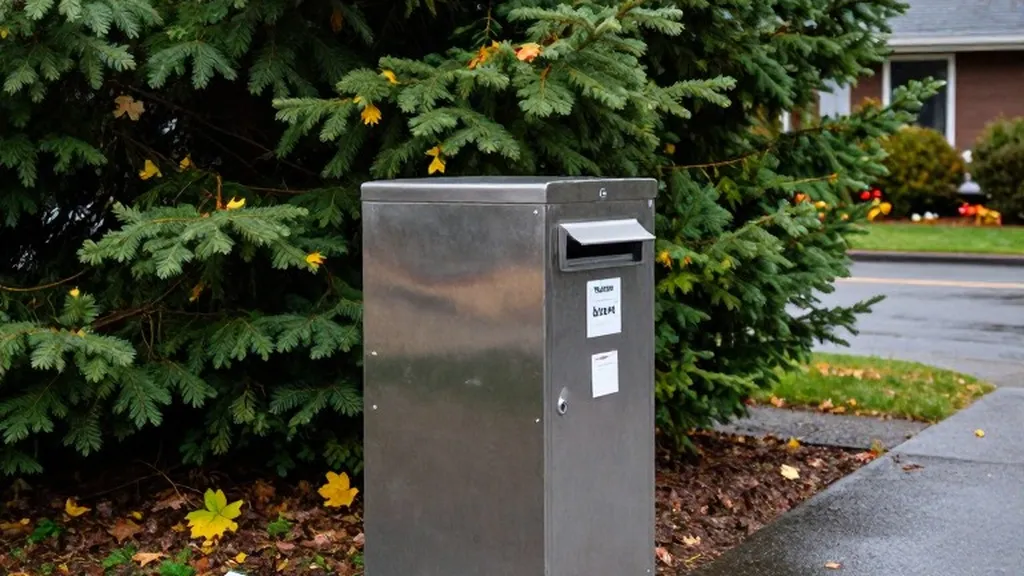
The U.S. Postal Service has added hours, staff, and special lines to ensure that mail ballots are counted on time. This is crucial for states like Washington, Oregon, and Hawaii, where a significant portion of the electorate votes by mail. The addition of resources aims to alleviate any potential delays in processing the high volume of ballots. In Washington, polls close at 8 p.m., and the state relies heavily on mail-in voting. In Oregon, polls are open from 7 a.m. to 8 p.m., and mail voting is also prevalent. In Hawaii, polls are open from 7 a.m. to 7 p.m., and the state also uses mail voting extensively. The efficient handling of these ballots is essential to ensuring that every vote is counted accurately and on time.