House Fight Hinges on Three Seats, 46 Battlegrounds, and New Maps
With 435 seats up for grabs, Democrats need a net gain of three districts to seize control, a task complicated by redistricting in seven states and a significant Republican funding advantage.
By Kwame Montgomery ·
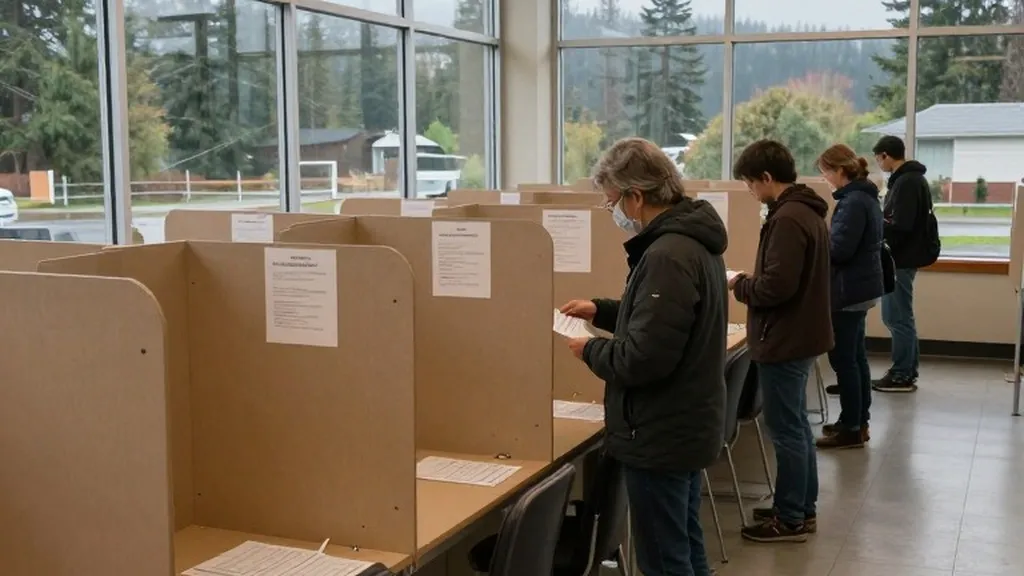
Voters across the United States are heading to polling places on Election Day to decide the composition of the House of Representatives, where all 435 seats are contested in this midterm election. The current balance of power is razor thin, with Republicans holding 218 seats, Democrats holding 214, and one independent seat occupied by a member who caucuses with the Democrats. This narrow margin means that the outcome of the chamber will likely be determined by a handful of districts rather than broad national swings.
Democrats require a net gain of three districts to secure a majority in the House, a threshold that places the party in a defensive position given the current seat distribution. Conversely, Republicans can afford to lose no more than two seats to maintain their control. According to Ballotpedia, 46 districts are classified as battlegrounds, with 25 of those currently held by Democrats and 21 held by Republicans. These contests will be the primary focus for campaign resources and voter outreach efforts in the final hours of the election.
The landscape for these House races has been significantly altered by redistricting in seven states, including California, Florida, Missouri, North Carolina, Tennessee, Texas, and Ohio. New congressional maps in these jurisdictions have reshaped the political geography, potentially altering the competitiveness of districts that were previously considered safe. In the Pacific Northwest, where polls in Washington and Oregon close at 8 p.m. local time, voters are also weighing these national dynamics against regional priorities.
Financial resources have played a defining role in this cycle, which is projected to be the most expensive in American history. Republican committees have out-raised and out-spent their Democratic counterparts, bolstered by significant contributions from Trump-affiliated groups and individual donors like Elon Musk. AP analysis of AdImpact data indicates that 88.1 percent of Republican general election television ad spending was directed toward states and districts that Donald Trump won in 2024. This spending strategy suggests a focus on consolidating support in areas where the party already holds a strong base.
Despite the Republican money edge, Democrats have managed to out-raise their opponents at the individual candidate level. This distinction highlights the different strategies employed by the parties in their general election campaigns. The Associated Press reports that Democrats are cautiously optimistic, citing voter anger over high prices and an unpopular war with Iran as potential drivers for their cause. More than 57 million people had already cast their ballots before Election Day, surpassing early voting totals from the previous cycle in many closely watched states.
For Democrats, the primary issues driving voter enthusiasm include the cost of living, health care access, and the need for oversight of the administration. House Democratic Leader Hakeem Jeffries has outlined a 100-day agenda focused on these economic concerns should his party take control of the chamber. His plan emphasizes immediate action on inflation and government efficiency. The prospect of a Democratic majority also raises the likelihood of new investigations and potential impeachment proceedings, which party leaders argue is necessary to restore accountability in Washington.
In the Pacific Northwest, voters in Oregon and Washington are participating in elections that include open seats for Senate and governor in Oregon, while Washington has no Senate or governor races on the ballot. In Oregon, polls are open from 7 a.m. to 8 p.m., and the state is deciding its next Senate and gubernatorial leaders. In Washington, where polls close at 8 p.m., the focus remains on the House races and other down-ballot measures. These regional contests are part of the larger national picture that will determine the balance of power in Congress for the final two years of President Trump's second term.
Republican leadership acknowledges the challenges ahead, with RNC Chairman Joe Gruters emphasizing the critical importance of turnout. Gruters stated that if Republicans turn out their voters, they can win, a strategy that relies on mobilizing the base in the 218 seats they currently hold. The party has been bracing for the possibility of losing the House, a common pattern in midterm elections where the president's party typically loses seats. The new district maps in states like Florida and Texas are seen as tools to help protect Republican incumbents, although some analysts note that these districts may not vote as predicted.
The administration's handling of election administration has also been a point of contention, with federal judges temporarily barring plans to prevent noncitizen voting. Critics argue these efforts risk disenfranchising eligible voters and infringe on state authority, while supporters view them as necessary safeguards. The U.S. Postal Service has added hours and staff to ensure mail ballots are counted on time, a logistical step that is crucial in states like Washington and Oregon where mail-in voting is prevalent. Voters are encouraged to check their specific polling place hours and ID requirements, as rules vary by state.
As polls begin to close in the early evening, the focus shifts to the 46 battleground districts where the three-seat margin will be decided. The interplay of new maps, financial advantages, and voter sentiment will determine whether Democrats can achieve the net gain of three seats required for a majority. The results of these contests will shape the legislative agenda for the final two years of the current presidential term, with significant implications for issues ranging from economic policy to foreign affairs. The election serves as a referendum on the administration's performance, with voters weighing their approval of President Trump's job performance against their desire for change in Congress.