Rubio Skips Delhi, Visits Mumbai And Refinery
The US secretary of state's itinerary avoided the Indian capital as tariffs and Russian oil purchases strained relations between Washington and New Delhi.
By Chioma Rogers ·
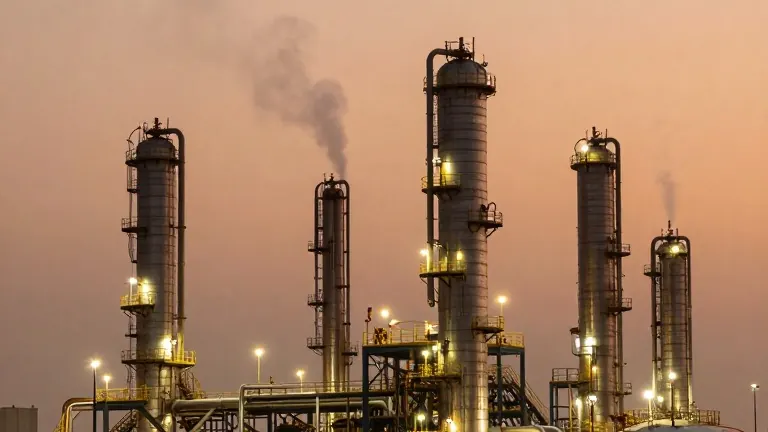
US Secretary of State Marco Rubio traveled to India last week for his second visit of the year, but he never went to New Delhi. Instead, he arrived in Mumbai, met Foreign Minister Subrahmanyam Jaishankar, and spoke with business leaders. He then drove to Jamnagar, a town in Gujarat that houses Reliance Industries' oil refinery complex, where he met Mukesh Ambani, the company's chair.
The decision to bypass the national capital drew attention in Indian and American media. Bilateral relations have tightened under the second Trump administration, driven by tariffs and India's continued purchase of Russian oil. Rubio's return, five months after his first visit as secretary of state, suggests the relationship remains active despite those pressures.
Milan Vaishnav, who directs the South Asia Program at the Carnegie Endowment for International Peace and has tracked India's global standing for a decade, said the itinerary choices were deliberate. "Not every bilateral meeting has to take place in a national capital," Vaishnav said. "I do think the choice of venues was intentional. This administration and, particularly, this president, sees foreign policy through the lens of 'deal-making'. And if you're trying to drum up business deals, what better place to visit than Mumbai?"
Vaishnav pointed to the timing of the Jamnagar stop. Petrol prices in the United States are high and were expected to matter in the 3 November midterm elections. "One of Rubio's objectives was to encourage Reliance and, by extension, India to process more Venezuelan crude," Vaishnav said. India consumes large volumes of oil and exports refined petroleum products.
The relationship has shifted in other ways since Trump returned to office. Vaishnav called the administration's embrace of Pakistan the biggest plot twist for him, pointing to the May 2025 conflict between India and Pakistan. Trump later thanked Pakistan for its help locating a suspect linked to a 2021 bombing in Afghanistan that killed 13 US service members, then welcomed Pakistan's army chief, Asim Munir, to the White House in June after Munir called for Trump to receive the Nobel peace prize. "I chalk up the reversal to a few factors: Trump's well-known strongman envy, Pakistan's savvy diplomacy, and the prospect of energy and crypto deals involving members of Trump's inner circle," Vaishnav said.
Sameer Lalwani, a colleague of Vaishnav's at Carnegie, has written that the US relationship with India holds more firmly than political language suggests. He noted that bilateral trade reached a record high in 2025, US technology companies pledged nearly $68bn in AI infrastructure investment in India, and the two countries conducted a record number of joint military exercises this year.
Vaishnav listed three reasons for caution. Trump imposed a 50% tariff on India in 2025, then lowered it to 18% earlier this year without a comprehensive trade deal. Restrictions on H-1B visas and green cards have hit Indian workers in Silicon Valley, and New Delhi called remarks by US Vice-President JD Vance about Indian professionals "deeply offensive" earlier this month. In January, US Commerce Secretary Howard Lutnick attributed the lack of a trade deal to Modi's failure to phone Trump, a point New Delhi disputed. "Much of the progress we are seeing is the product of decisions made years ago. It is one thing to keep existing projects moving, but turbulence in the relationship could make new initiatives a heavier lift," Vaishnav said.
Vaishnav also addressed India's own path to becoming a global power. "I would argue that the most important investment is political, ensuring India remains a robust, inclusive, participatory democracy," he said. He added that returns on India's infrastructure spending will be limited unless the government improves dispute resolution, legal impartiality, tax enforcement, and regulatory certainty.
Air quality in Delhi dropped to the poor category this week as the annual pollution season began, and authorities imposed emergency measures that include a ban on coal-fired tandoors in restaurants and limits on diesel generators. Mumbai's municipal authorities authorized 7,633 trees to be felled over five months this year for development work; about 3,500 will be removed permanently, and the rest will be replanted elsewhere.
Source: The Guardian