80% of Gaza's buildings are damaged as voters await Tuesday's Israeli election
Residents in the besieged enclave say the result will determine whether they can return to their homes, even as daily air strikes continue under the current ceasefire.
By Claire Castillo ·
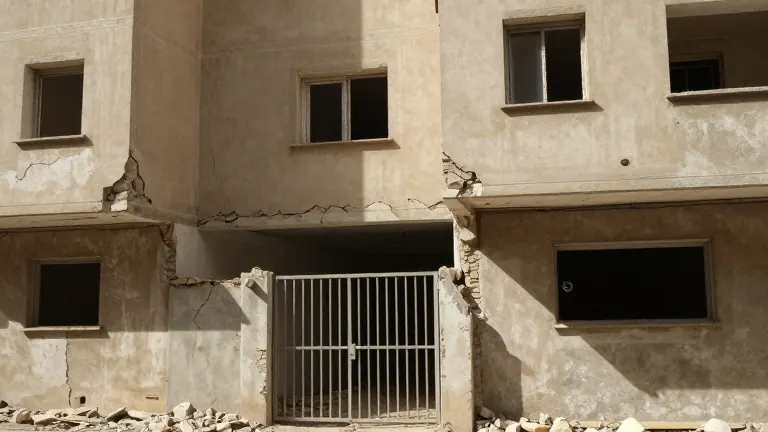
More than 80 percent of buildings in the Gaza Strip have sustained damage, according to Islam Salem, a 41-year-old resident displaced from Beit Lahiya. Of those damaged structures, approximately two-thirds have been completely destroyed. Salem points to this physical devastation as the backdrop against which Palestinians watch the Israeli polls open on Tuesday, October 27. The vote determines the next government in a state whose strategy toward Gaza has remained a central debate point throughout the campaign.
The path to this election has been marked by three years of war that began with the Hamas-led attacks on Israel on October 7, 2023. Prime Minister Benjamin Netanyahu faced intense criticism for his security handling prior to that date. Members of his far-right coalition have since pushed for a harder line against Gaza, with some advocating for the expulsion of the territory's population. A ceasefire took hold in October 2025, yet the lull in major combat operations has not ended the daily reality of Israeli air strikes and a strict siege that limits the flow of basic goods.
For the next government, the race is primarily between Netanyahu and Gadi Eisenkot, a former Israeli military commander. Eisenkot represents the main opposition challenge. The outcome will directly influence the control of the territory, particularly regarding the areas defined by the so-called Yellow Line. Israel currently maintains control over roughly 65 percent of Gaza’s land within this designated zone. This geographic division is the primary factor for many displaced families deciding whether they can return to their original neighborhoods.
In Deir el-Balah, Mohammed Eliyan, 36, lives with his five children after being displaced from the Jabalia refugee camp in the north. He stated that he follows the election to see who will win the next phase of the conflict. Eliyan expressed a preference for Eisenkot, viewing Netanyahu as the more hardline option. He fears that a Netanyahu victory will lead to further war and displacement. Despite these hopes, Eliyan admitted he does not expect a dramatic improvement in his family's situation. He called on the next leader to end the war, prevent starvation, and ease restrictions at Gaza's crossings.
Hanan Abu al-Maaza, 57, has been displaced more than 12 times during the war. She described living with persistent fear and anxiety, noting that she goes to sleep without feeling safe. Abu al-Maaza believes a defeat for Netanyahu would increase the chances of her returning to her home in Beit Lahiya. She urged the next leader to show mercy, arguing that there is hardly anything left in Gaza to destroy. Her sentiment reflects a widespread desire for a pause in the violence that has defined the last three years.
Manar Owaida, 23, resides in the Tal al-Hawa neighborhood of Gaza City. She hopes for a withdrawal from the Yellow Line, which she believes would allow life to gradually return to normal. However, her greatest concern is that Netanyahu might launch a wider regional war to alleviate domestic political pressure around the time of the vote. She characterized the long-term Israeli policy as one of consistent blockade and destruction since 1948, suggesting that a change in leadership might not fundamentally alter that trajectory.
Mousa Ali, 33, is in Gaza City with his four children. He said the election is critical for Palestinians because of the Yellow Line. He hopes the opposition will perform better in allowing displaced people to return to their areas. Ali also expressed hope that Arab parties will perform strongly in the vote, giving them a role in the next government. He remains skeptical that a new leader will stop the ongoing bloodshed, noting that every day in Gaza involves bombing and deaths. The polls open on Tuesday, and the results will shape the immediate future of the enclave's residents.
The election takes place against a backdrop of dire living conditions. Residents like Salem, Eliyan, Abu al-Maaza, Owaida, and Ali are waiting with a mixture of fear and a small amount of hope. They seek a government that will ease the blockade and grant them breathing space. The outcome will determine the level of control Israel maintains over the territory and the pace of any potential reconstruction efforts.
Source: Al Jazeera