Election Night Watch: Six Key Indicators for Congressional Control
From Latino turnout in Florida to Black voter participation in Michigan, specific district races will determine which party holds the balance of power in the House and Senate.
By Kwame Montgomery ·
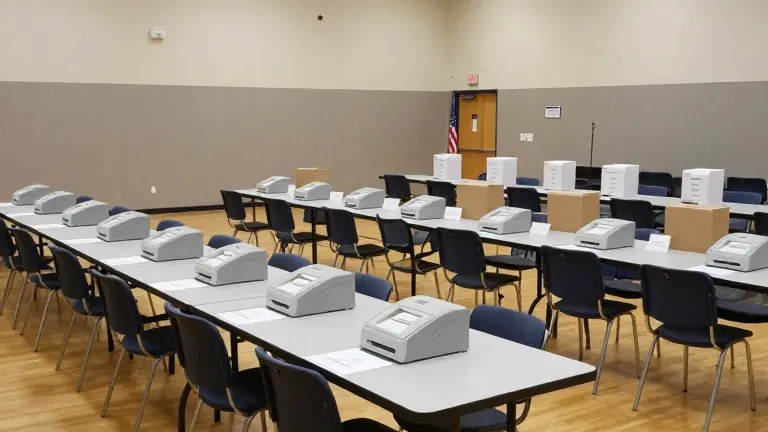
Voters across the United States will head to the polls on Tuesday, November 3, for the 2026 midterm elections. With a crowded ballot spanning presidential-level attention to local state legislatures, analysts are tracking six specific data points to determine which party will control the House and Senate. These indicators range from turnout in swing districts to the voting patterns of specific demographic groups.
The first signs of the evening's trends will emerge from Indiana and Kentucky, which report results at 6 p.m. ET. Florida, split between Eastern and Central time zones, will follow with a wave of House race results at 7 p.m. ET. Statewide contests in Florida, including the Senate and governor's race, may not be called until 8 p.m. ET. Early indicators to watch include Indiana's 5th Congressional District and Kentucky's 6th, both currently held by Republicans but increasingly competitive. If these races remain close or shift to Democrats, it may signal low Republican turnout. In Florida, the 22nd District, held by a Democrat but redrawn to favor Republicans, and the heavily Latino 27th District, where Donald Trump won by double digits in 2024, will serve as barometers for key subgroups.
The share of the vote captured among independents will determine the Republican success rate. Historical data suggests that in the decade since the rise of Donald Trump, Republicans have won midterms when they secure at least 46% of independent voters. They have lost when that number falls below the threshold. This shift reflects a political realignment where blue-collar white voters have trended toward the Republican side, while better-educated white voters have moved toward the Democrats.
Black voter turnout in Michigan is a decisive factor for Senate control. The state's Senate race pits Democrat Abdul El-Sayed against the Republican incumbent. If Republicans hold the seat, Democrats need to win five Republican-held Senate seats to take control of the chamber; if they lose it, the required number drops to four. El-Sayed's path to victory depends heavily on performance in Wayne County, home to Detroit. Historical data shows that Democratic candidates have generally needed 68% or more of the Wayne County vote to win the state, unless they significantly outperform in the suburbs, a strategy used by Senator Elissa Slotkin in 2024.
Turnout among voters aged 18 to 29 drops sharply in midterm cycles compared to presidential elections. While 43% of registered young voters cast ballots in presidential races since 1992, that figure falls to 21% in midterms. Despite lower participation, this group remains essential for Democratic success. In the last two decades, Democrats have fared well when winning this demographic by more than 20 points. The sole exception was 2022, when Democrats won young voters by 28 points but still lost nine House seats, though they managed to gain one Senate seat.
In Texas, the contest between Democrat James Talarico and Republican Ken Paxton hinges on two factors: the gap between the vote totals of Governor Greg Abbott and Paxton, and Latino turnout in South Texas. No Democrat has won a statewide office in Texas since 1994. Talarico's polling lead is viewed with skepticism due to past polling errors in the state. A potential path to victory exists if the difference between Abbott's and Paxton's totals exceeds 400,000 votes, a margin seen in 2018 when Ted Cruz won despite trailing Abbott by that amount. Additionally, Talarico must outperform Beto O'Rourke's 2018 results in Latino-heavy counties such as Cameron, Hidalgo, Webb, and Nueces.
Finally, party identification trends will offer insight into the electorate's mood. The percentage of voters identifying as Democrats hit a low of 31% in 2024. To win, Democrats will need to reverse this decline. Current polls indicate high levels of enthusiasm among Democrats, driven in part by 53% of likely voters strongly disapproving of President Trump's job performance. Races such as the Michigan Senate seat and the state's 7th Congressional District, both featuring progressive Democratic candidates, will serve as tests for the party's ideological direction ahead of the 2028 presidential cycle.
Source: WWNO