Qatar Slowdown and Cold Snap Push European Gas to €97
Wholesale prices reached their highest level since 2022 on Monday, driven by Middle East tensions and a deficit in regional gas reserves.
By Kwame Montgomery ·
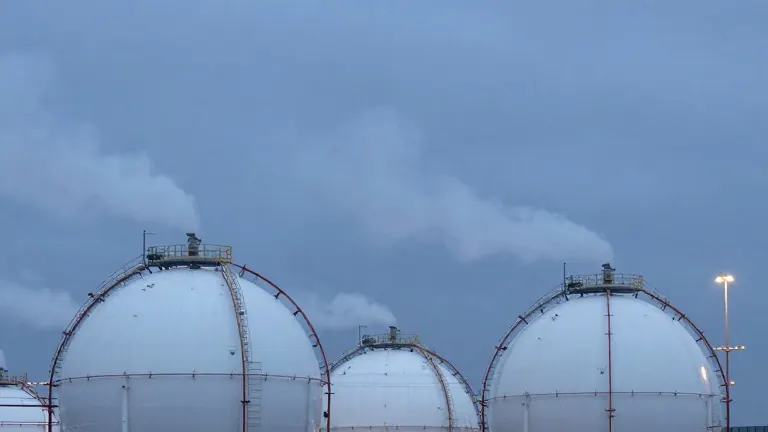
Wholesale gas prices in Europe reached €97 per megawatt-hour on Monday, the highest level recorded since 2022. The spike follows a drop in temperatures across the continent and growing concerns about supply stability ahead of winter. Traders are currently pricing in higher demand for heating as the season approaches.
The price jump coincides with a historic low in stored gas reserves. European storage facilities are currently 75% full, a level not seen in more than a decade. Seasonal averages for this time of year are typically closer to 80%. This shortfall stems from two main factors: a slowdown in exports from Qatar and increased consumption during the summer months. Higher usage of gas for refrigeration and cooling systems contributed to the depletion of stores earlier than usual.
Geopolitical tensions in the Middle East are also influencing market sentiment. Reports indicate that the United States and Israel have prepared plans for renewed strikes against Iran. These developments follow the US midterm elections and have already impacted oil markets. The international Brent crude benchmark reached $117 a barrel on Friday before retreating by approximately 2% on Monday. It currently remains above $114 a barrel.
The United Kingdom is facing its own set of challenges. The month ahead gas contract rose by 4% to 240p a therm on Monday. This marks the highest level since December 2022, when prices surged following Russia’s full-scale invasion of Ukraine. British energy regulators state that the country will likely pay among the highest energy costs in Europe this winter. This outcome is driven by a heavy reliance on imported gas to maintain a steady supply.
Britain holds some of the smallest gas reserves in Europe, a result of decades of reliance on domestic production from the North Sea. According to the Office for National Statistics, the UK paid a record £4 billion for power imports in the year ending in August. Half of that amount was spent on electricity imported from France. The country also made near-record payments to operate gas plants while wind and solar farms were paid to reduce output due to grid bottlenecks.
Household budgets are expected to feel the pressure. Energy bills for British households are predicted to rise by 16% in January. This increase would bring the typical annual dual fuel bill to the equivalent of roughly £2,000. On the financial markets, the Stoxx Europe 600 index rose by 0.3% in early Monday trading. The UK’s FTSE 100 index climbed by 0.4% as the weaker oil price provided some relief to investors.
Source: The Guardian