Pakistan Army Chief Makes Second Tehran Trip Amid Eight-Month War
Field Marshal Asim Munir returned to the Iranian capital with Saudi and Turkish allies to push for de-escalation, while domestic political tensions persist in Khyber Pakhtunkhwa.
By Chioma Rogers ·
Pakistan’s military leadership has described its mediation efforts between Iran and the United States as proceeding with cautious optimism. The assessment comes from Lieutenant General Ahmed Sharif Chaudhry, the director general of Inter-Services Public Relations, who spoke from Rawalpindi on Friday.
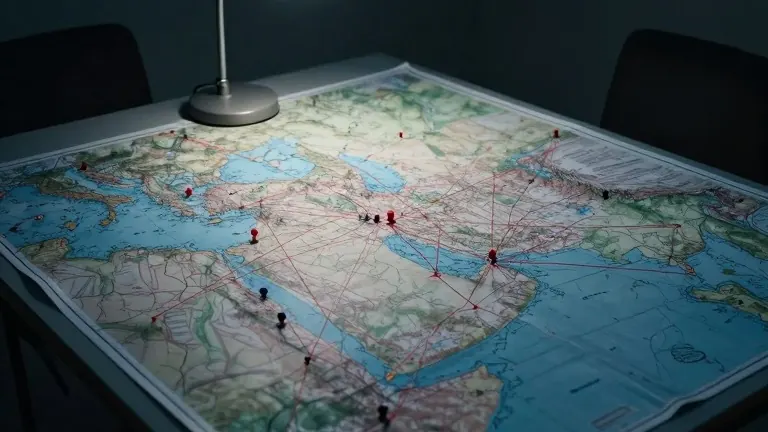
Chaudhry, who gave his first interview since the recent diplomatic push, stated that Army Chief Field Marshal Asim Munir traveled to Tehran twice this month. The most recent visit occurred on Monday, when Munir was accompanied by Saudi Defense Minister Prince Khalid bin Salman and Turkish intelligence chief Ibrahim Kalin. The trio traveled to discuss de-escalation strategies for a conflict that has now lasted eight months.
When asked if the repeated trips signaled progress, Chaudhry pointed to the Field Marshal’s willingness to travel as evidence of positive momentum. However, he noted the presence of powerful spoilers and detractors who believed that ongoing conflict served their interests, though he did not name the specific parties involved.
The diplomatic mission carries weight due to a joint defense pact signed by Pakistan, Saudi Arabia, and Turkey on August 7. The Mecca Joint Defense Agreement stipulates that an attack on any signatory is treated as an attack on all three nations. Chaudhry confirmed on Friday that the wording of the pact does not prohibit new members from joining. He stated that any nation sharing a vision of collective deterrence and regional peace would be welcome, with the final decision resting with the political leadership of the current signatories.
Following the Monday talks in Tehran, Mohsen Rezaei, secretary of Iran’s Supreme National Security Council, emphasized that regional security should be managed by regional countries without foreign intervention. Chaudhry declined to disclose the specific contents of the discussions or confirm whether the United States had explicitly backed the trip.
Domestically, the military is navigating a tense political environment in Khyber Pakhtunkhwa. The federal government suspended the provincial government led by the Pakistan Tehreek-e-Insaf party on October 11 and detained Chief Minister Sohail Afridi. Officials accused the administration of failing to tackle militancy, a claim the party rejected, calling the move a pretext to crush protests.
Chaudhry clarified that the army conducts counter-terrorism through intelligence-based operations rather than large-scale campaigns. He stated that the tempo of these operations will increase. The province remains the only region controlled by the party of jailed former prime minister Imran Khan, whose supporters view the military as a key figure in his political struggles.
Source: The Jerusalem Post