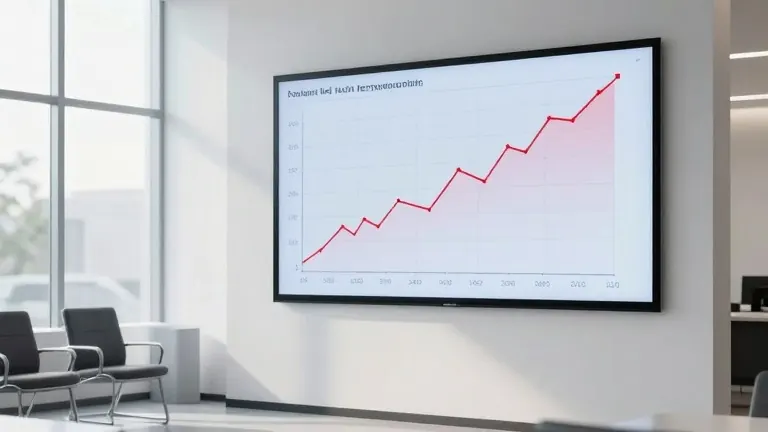
Visa data shows 58% of US spending now happens online
A new report indicates that digital transactions have nearly doubled in frequency for many cardholders, raising questions about the hidden costs of convenience services.
By Claire Castillo ·

A Visa report released in early 2026 indicates that 58% of domestic spending in the United States now occurs online, a substantial jump from 48% in 2019.
The data, drawn from Visa transactions, suggests a fundamental shift in how Americans manage their daily purchases. Mohamed Bardastani, a principal CEMEA economist at Visa, described the change as a meaningful shift in consumer behavior. He noted in an email that the strongest evidence for this trend is the rise in frequent online and in-app purchasing.
The frequency of digital transactions has increased sharply for a large portion of the population. About a quarter of active U.S. Visa cards are now used for 10 or more online or in-app transactions per month. This figure represents a near-doubling of activity compared to 2019 levels.
Financial advisors suggest that this ease of access often leads to untracked spending. Corey Bates, an investment advisor representative at Solomon Financial in Carmel, Indiana, explained that online spending removes the friction usually present in traditional transactions. He stated that it is difficult to keep track of these purchases if a consumer is not intentionally reviewing their budget.
The convenience of digital shopping comes with additional costs that are not always immediately visible. Services like Instacart charge service fees, shopper tips, and markups on items beyond the standard store price. Martin Lynch, president of the Financial Counseling Association of America, summarized the trade-off by noting that consumers are saving time but paying for it.
Some expenses are easier to justify than others. Lynch cited a personal example where grocery delivery was valuable after he broke his leg a couple of years ago. As the family member responsible for groceries, he found that shopping online allowed him to continue contributing to household needs without physical strain.
Experts recommend establishing specific rules to manage digital spending. Shampaigne Graves, a women’s consumer expert and founder of Women’s Research Solutions in Dallas, advised clients to set limits on delivery services and subscription counts. She suggested that a restaurant might need to be several miles away before ordering delivery is worthwhile. She also recommended auditing streaming subscriptions to keep no more than three per month.
Graves observed that subscription prices rise frequently, but consumers often fail to check their statements to see the cumulative impact. She emphasized the need for regular reviews of financial statements to understand how these recurring charges affect overall budgets.
Bardastani acknowledged that convenience holds real value for consumers. He advised that individuals should remain thoughtful about which services are actually delivering value for their money. The Visa research did not determine whether people are spending more overall or if digital transactions are simply replacing other forms of spending.
Source: Los Angeles Daily News
More Business · Rip-Off Report · Report a business · Got a Story?