New book profiles the surgeon behind Sherlock Holmes
Medical historian Lindsey Fitzharris details the life of Joseph Bell, the Edinburgh doctor whose diagnostic methods shaped Sir Arthur Conan Doyle's famous fictional detective.
By Claire Castillo ·
Lindsey Fitzharris has published a new biography of Joseph Bell, the 19th-century surgeon at the University of Edinburgh who served as the primary inspiration for Sherlock Holmes. Titled Sleuth-Hound: The Case of the Real Sherlock Holmes, the book examines Bell's career and his relationship with a young medical student named Arthur Conan Doyle. Fitzharris aims to apply a medical history perspective to a figure previously explored mostly through the lens of detective fiction.
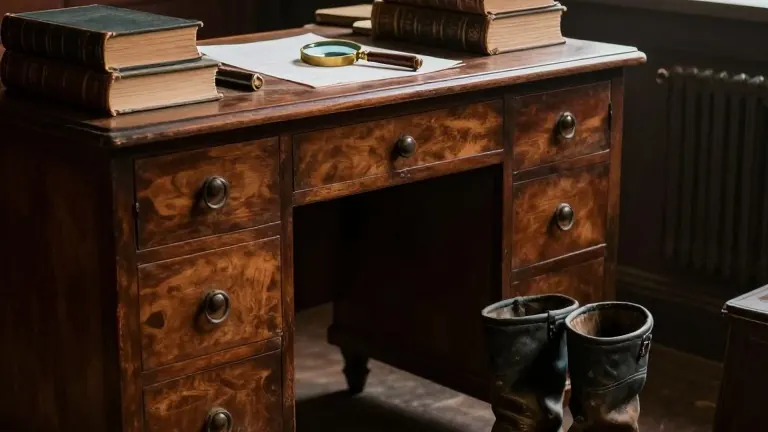
Bell was known for his unconventional diagnostic approach. He could deduce a patient's occupation, habits, and ailments simply by observing them. One specific incident involved Bell identifying the route a patient had taken to the infirmary by analyzing the type of clay on their boots. Doyle adapted this real-life event for his novel The Sign of the Four. Bell also collaborated with a local police surgeon on several high-profile murder cases of that era.
Fitzharris is no stranger to writing about historical medical figures. She published The Butchering Art in 2017, a biography of Joseph Lister, a pioneer in Scottish surgery. In 2022, she released The Facemaker, which chronicles the work of Harold Gillies, a surgeon who rebuilt the faces of World War I veterans. Her work extends beyond print, including a 2020 documentary for the Smithsonian Channel called The Curious Life and Death Of….
In that documentary, Fitzharris performed virtual autopsies, tested blood samples, and interviewed witnesses to investigate famous deaths. Subjects ranged from Pablo Escobar to Harry Houdini. Last year, she collaborated with her husband, caricaturist Adrian Teal, on an illustrated children's book titled Dead Ends! Flukes, Flops, and Failures that Sparked Medical Marvels.
In an interview, Fitzharris explained that while Sherlock Holmes enthusiasts had some knowledge of Bell, there was a gap in commercial literature dedicated to him. She noted that a book by Ely Liebow was published in 1982, but she wanted to bring a distinct medical focus to the story. Her previous work, The Butchering Art, also explored the Edinburgh of the 19th century, a setting defined by body snatchers and the discovery of ether.
The new book returns to that same historical and geographical context. It places Bell and Doyle within the specific environment of Edinburgh during the late 1800s. The text describes Bell as a medical detective who worked at the intersection of academic medicine and public law enforcement.
Fitzharris stated that she wanted to bring a medical history lens to the subject. She acknowledged that Bell is well known to those in the Sherlockian community but argued that his professional life deserved deeper analysis. The book serves as a detailed look at the man who taught Doyle how to observe and deduce.
Source: Ars Technica