NASA Overhauls Artemis Moon Landing Strategy for 2028
NASA confirms a simplified architecture for Artemis missions, moving Orion-Starship docking to high-Earth orbit and eliminating in-space refueling for Blue Origin.
By Miguel Hernandez ·
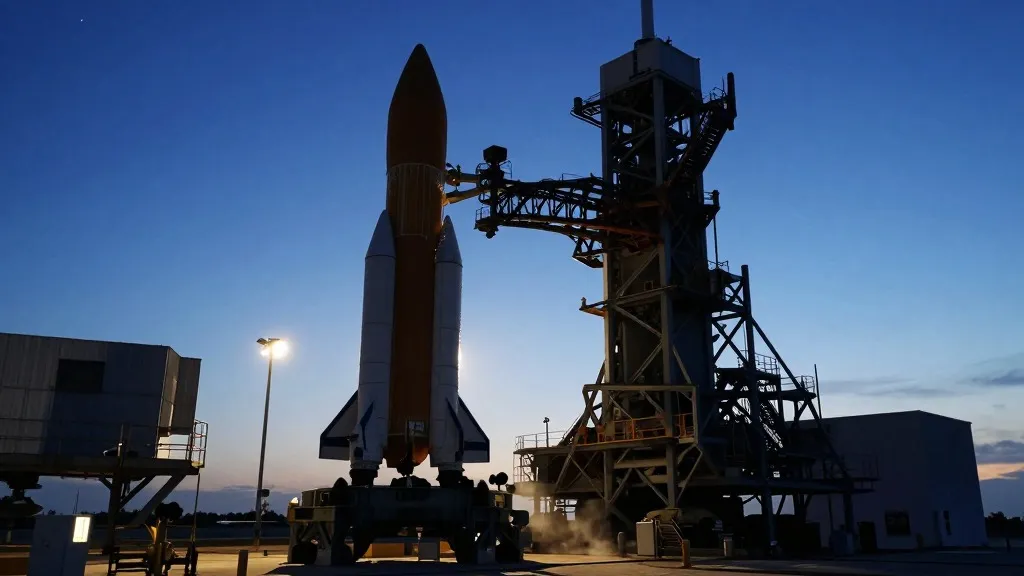
NASA has redrawn the roadmap for its next crewed lunar missions.
The agency held a long press conference on Friday to outline its current plans. It aims to send astronauts back to the Moon as early as 2028. This is the first time officials have detailed these specific architectural changes. They confirmed that the Artemis III demonstration mission is still targeted for the summer of 2027. That mission will test docking procedures near Earth. The agency is also tracking a 2028 launch for Artemis IV. That flight would mark the first actual surface landing under the new program structure. NASA Administrator Jared Isaacman stated, “This is an achievable path we are on right now.” He noted that the agency has the mandate, resources, and stakeholder support needed to execute the plan.
The shift in strategy began after NASA canceled the Lunar Gateway station earlier this year. That decision removed a major hurdle for SpaceX. In early 2026, SpaceX engineers met with NASA officials. Their primary request was to stop requiring Orion to dock with Starship in a near-rectilinear halo orbit around the Moon. That specific orbital path required significant energy and presented other technical difficulties. The cancellation of the Gateway solved this problem by allowing for a different docking location.
The revised architecture now calls for the Orion spacecraft to dock with the Starship lunar lander in high-Earth orbit. From there, the combined vehicles will transit to the Moon. This change simplifies the trajectory and reduces the complexity of the final approach. It represents a substantial departure from previous mission designs that relied on the Gateway station for rendezvous.
Blue Origin’s path to the lunar surface has also changed. The agency’s plan now involves four launches of the New Glenn rocket. Crucially, this architecture does not include any spacecraft-to-spacecraft refuelings in space. The Blue Moon lander is designed to operate independently of this refueling step. The plan allows for the Blue Moon lander to rendezvous with Orion in low-Lunar orbit. This approach streamlines the logistics for the Blue Origin team by eliminating the complex in-space propellant transfer requirements that were part of earlier concepts.
While the new plans offer a clearer path forward, questions remain about the timeline. The agency is confident in its current trajectory. However, holding to the 2027 and 2028 dates will require steady progress from both commercial partners. The next few months will be critical for validating these new operational procedures. Success in the upcoming demonstration missions will determine if the 2028 landing target remains realistic.
Source: Ars Technica