Midterm Elections: Trump's Approval Slump and Electoral Uncertainty
Polling data shows the President's approval rating has dropped to 37%, setting the stage for a likely Republican loss in the House and a contested Senate race.
By Claire Castillo ·
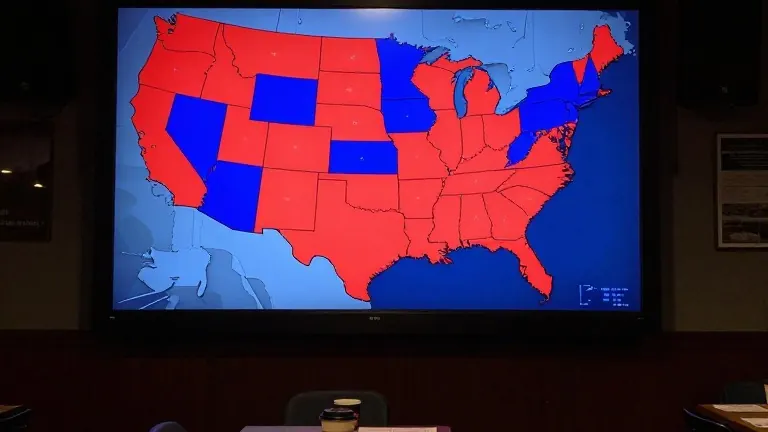
President Donald Trump is facing a difficult environment in the midterm elections scheduled for Tuesday. Polling indicates that the electoral pendulum is swinging against the party of the incumbent, a pattern that has occurred in nearly every midterm cycle over the last century. This shift is expected to cost Republicans their slim majority in the House. In the Senate, the race is close enough that the party could maintain control only by using the tie-breaking vote held by Vice President JD Vance.
The President spent the final weekend of the campaign in Iowa and Kansas, two states he has historically won by wide margins. Trump made live appearances in both states while conducting remote rallies in 19 other locations. This strategy was designed to protect the party's Senate seats in areas that were previously solid for Republicans. Kansas, for instance, has not elected a Democrat to the Senate since 1932, and Iowa was a key state for Trump in his 2016 victory.
The current political climate is defined by a sharp decline in Trump's personal approval ratings. Average polling shows his approval number falling from 52% in early 2025 to 37% now. This figure is below the 40% threshold that has historically predicted severe midterm losses for the President's party. The drop is attributed to economic concerns, specifically high inflation and rising gas prices, as well as unmet promises regarding foreign policy in Ukraine and the Middle East.
Anti-Trump sentiment is manifesting in rallies across the country, where the slogan "No Kings" has become a prominent theme. Democrats are focusing their messaging on the gap between the President's promises and current reality. While the President has attempted to make the election a referendum on himself, the broader electorate appears more focused on daily economic pressures and the conduct of the administration.
Democrats are positioning themselves to take control of at least one chamber of Congress. However, their internal cohesion remains a point of contention. The party includes a mix of consensus builders and left-wing candidates, including those associated with the Democratic Socialists of America. These candidates have featured prominently in Republican campaign ads, even in districts where they did not secure the nomination. Democrats have united around issues such as grocery prices, energy costs, and opposition to large data centers built for artificial intelligence.
Ruy Teixeira, a political demographer formerly associated with the Center for American Progress and the Brookings Institution, is now at the American Enterprise Institute. In October, he published a list of 11 questions that Democrats must answer if they regain congressional power. His final question asks whether the party will prioritize the interests of working-class voters over its recent focus on race, gender, and social policy. Teixeira, co-author of "America's Forgotten Majority," argues that the party must reconnect with white, non-college educated voters.
Beyond partisan dynamics, the elections are testing public confidence in the voting system itself. Nonpartisan experts, including academics and lawyers, generally support the current state of American election administration. They point to upgrades in technology and funding since the Help America Vote Act was passed in 2002, which replaced punch-card ballots with touch-screen technology and paper trails.
Despite these improvements, the President continues to question the integrity of the process. Since his 2016 nomination, Trump has suggested that losses are the result of fraud. He frequently labels polling results and news reporting as "fake news" and has asked reporters to identify their affiliations during White House briefings. The next few days will test whether voters maintain faith in the system's ability to reflect the will of the people clearly and accurately.
Source: KYPX