Housing: Riverside's Preapproved Duplex Plans Save Builders Time and Money
A UC Riverside study finds that preapproved blueprints for smaller housing types cut design costs by an average of $10,300 and shorten the permitting process by 53 days.
By Claire Castillo ·
Kristen Kopko, research manager at the University of California, Riverside Center for Community Solutions, leads a new study suggesting that preapproved building plans can ease pressure on California's housing market. The research focuses on smaller residential developments, including duplexes and bungalow courts, which often struggle to cover high design and permitting expenses without the budget scale of large apartment complexes.
The study, conducted by the center's School of Public Policy team, surveyed 89 California jurisdictions. Fifty-nine responded to the inquiry. Cities that implemented preapproved plans reported that these blueprints were processed an average of 2.8 times faster than conventional submissions. The average cost savings in design and related fees amounted to $10,300 per project. The time saved in the design and permitting phase averaged 53 days.
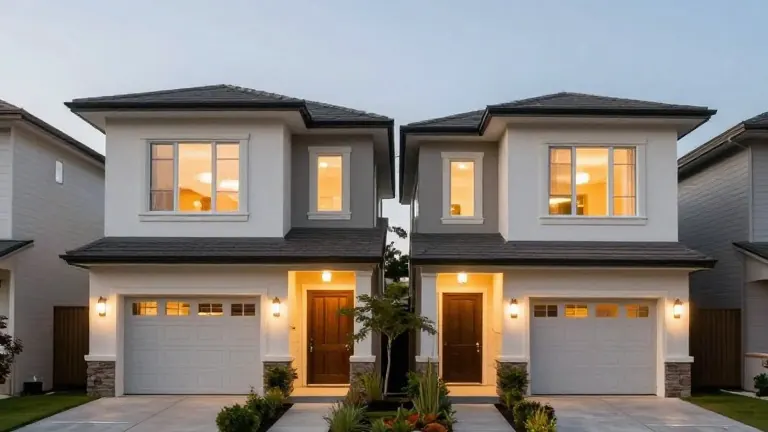
Riverside serves as the primary case study for the report. The City Council approved a new program in June that offers preapproved plans for duplexes and bungalow courts. The duplex design features two units of approximately 1,300 square feet each, with three bedrooms and two bathrooms. The bungalow option is 1,000 square feet, includes two bedrooms and two bathrooms, and has a private patio. Both designs include a ground-floor bedroom and bathroom to accommodate residents with varying mobility needs.
The city completed the architectural, structural, mechanical, electrical, and plumbing reviews before property owners applied for permits. This step eliminates redundant technical work for each individual project. However, the plans do not grant automatic permission to build. Owners must still satisfy local zoning, parking, utility, and grading requirements. Any modifications to the base designs may trigger additional review periods.
Most of the preapproved plans used by responding communities were for accessory dwelling units, commonly known as granny flats or backyard cottages. Those jurisdictions reported permitting or constructing about 500 such units using the preapproved method. Only four jurisdictions offered plans for housing types beyond ADUs. Just one reported permitting a project under this category, which was a triplex.
Savings varied widely depending on how cities funded the programs. Some provided publicly funded plans at no cost, while others required owners to purchase or license private designs. Reported savings ranged from a few thousand dollars to $45,000. Kopko noted that savings reported for smaller units may not directly apply to larger housing projects. The Riverside program targets middle-income households, though the resulting homes are not income-restricted.
The study authors, including Justine Ross, Jayden Li, and Qingfang Wang, recommend tracking whether these plans lead to completed homes. They suggest monitoring usage frequency, actual cost savings, and construction completion rates. Kopko stated that the approach could be particularly useful in areas with vacant or underused land suitable for infill development.
Source: UC Riverside News