Google's Finnish Data Center Expansion Triggers Wildlife Displacement and Regulatory Halt
Unauthorized deforestation for AI infrastructure has displaced wolf packs into nearby villages, prompting a work stoppage order from Finnish authorities.
By Priya Sharma ·
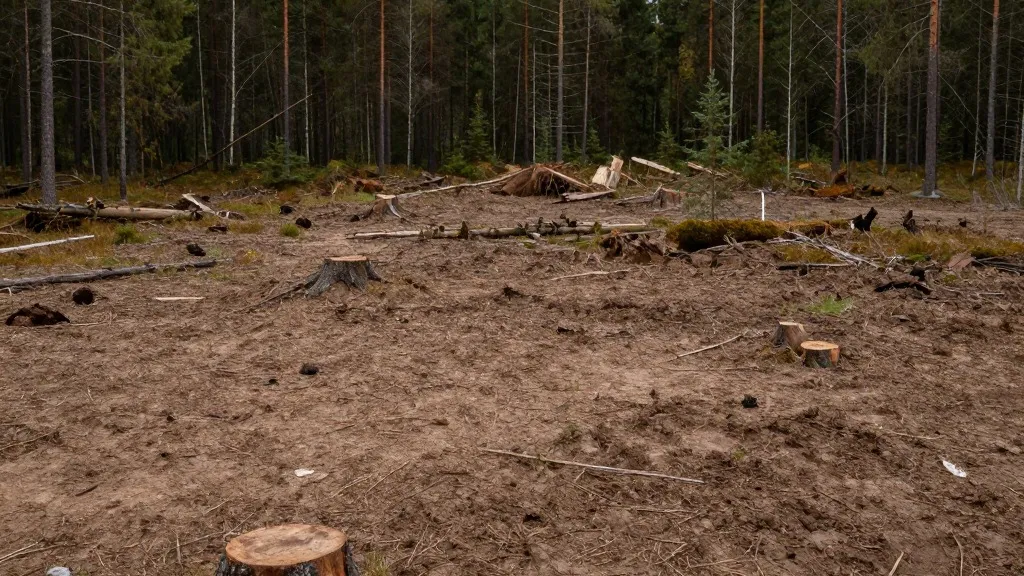
The rapid expansion of artificial intelligence infrastructure in Finland has precipitated an unexpected ecological conflict, with displaced wolf packs now venturing into residential areas. This development highlights the tangible, local consequences of the global race to build data centers, moving the debate beyond abstract environmental concerns to immediate human-wildlife interactions in rural communities.
Google’s country manager has issued an apology for the unauthorized clearing of forest land near Muhos, an action that has transformed 816 acres of woodland into a muddy expanse. The disruption extends to the area near the village of Otanmäki, located 55 miles southeast of Muhos, where approximately 500 acres of forest have also been cleared. The Finnish Licensing and Supervision Authority (LVV) has formally ordered Google to cease work in these regions, signaling a strict regulatory stance on the company's development activities.
The immediate impact on local wildlife has altered the behavior of predators previously confined to the forest. Anni Ranta, a resident of Otanmäki whose family has lived there for generations, noted that wolves are entering the village because their natural habitat has been removed. Ranta’s account underscores a broader safety concern for residents, as the displacement of wild animals brings them into closer proximity with human populations. This shift in animal behavior is a direct result of the habitat loss, creating a new layer of friction between technological development and rural life.
Local sentiment has grown increasingly critical, with residents reporting additional side effects such as construction noise, discoloration of local streams, and the displacement of rare bird species. A representative from the Finnish Association for Nature Conservation described Google’s handling of environmental policy as unprecedented and clearly flawed. The company’s approach appears to have prioritized speed over regulatory compliance, a strategy that has now drawn significant scrutiny from both conservation groups and the local community.
Despite the regulatory halt, Google maintains a cooperative posture. A spokesperson stated that the company will fully comply with the LVV’s requests and expects to maintain an open dialogue with authorities to strengthen its partnership with Finland. The company appears to be banking on the long-term economic benefits of its data centers to outweigh the current friction. However, the incident serves as a case study for other regions where AI data centers are being constructed, suggesting that environmental and social impacts may face steeper resistance than initially anticipated.
For observers in the Pacific Northwest, this situation offers a relevant parallel to local debates regarding technology expansion and its environmental footprint. The Finnish case demonstrates that the drive to secure computing power for AI models can lead to significant localized environmental changes, often resulting in regulatory interventions that pause or reshape project timelines. As AI infrastructure continues to proliferate globally, the balance between rapid deployment and ecological stewardship remains a critical challenge for tech giants and regulators alike.
Source: Tom's Hardware