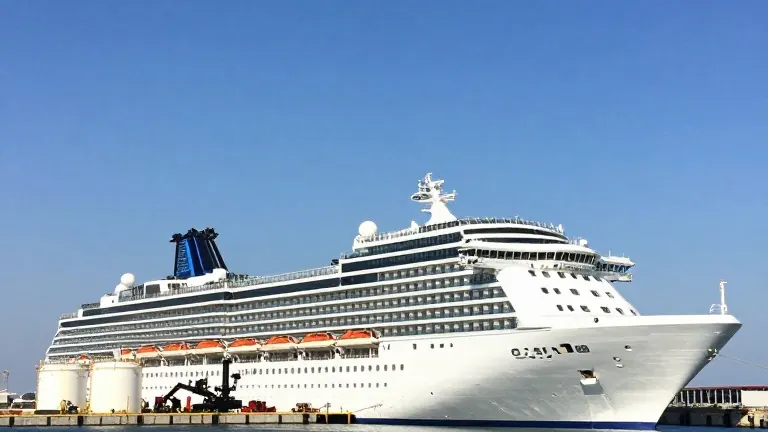
Carnival, Royal Caribbean, and Norwegian adopt distinct fuel strategies
While oil prices surge past $116 per barrel, the three major cruise lines use different financial and operational methods to manage rising costs.
By Claire Castillo ·
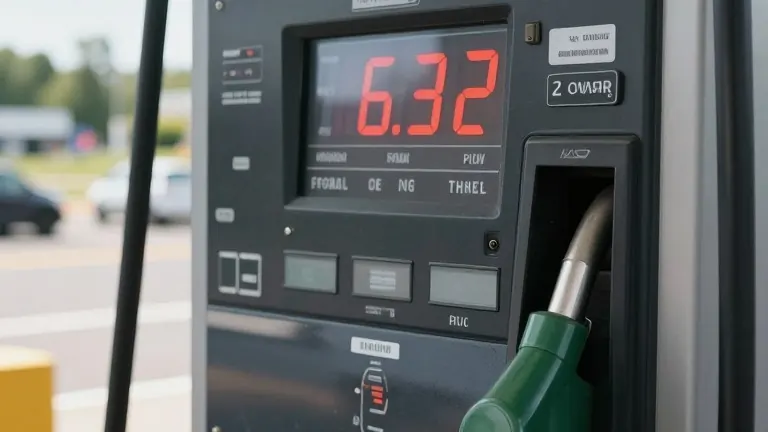
Brent crude oil reached $116.72 per barrel this week, marking a six-month high driven by the U.S.-Israel war with Iran that began on February 28.
The sustained spike in energy costs has forced major cruise operators to diverge in their approaches to financial exposure. Carnival, Royal Caribbean, and Norwegian Cruise Line Holdings all reported strong third-quarter earnings, yet their methods for mitigating fuel volatility differ fundamentally.
Carnival relies on operational efficiency rather than financial derivatives. CEO Josh Weinstein stated that the company has reduced its unit fuel consumption rate by 26% since 2019. The firm reported net income of $1.9 billion for the quarter, which exceeded analyst expectations. Weinstein estimated that these consumption savings contributed approximately $700 million in cost reductions for 2026. Fuel expenses for the quarter totaled $615 million, representing 7.3% of revenue, up from $425 million, or 6.7% of revenue, in the fourth quarter of 2025. The company projects fuel costs will rise to $640 million in the fourth quarter.
Royal Caribbean and Norwegian Cruise Line Holdings utilize hedging, a practice involving derivatives to limit exposure to price swings. Royal Caribbean reported that it has hedged more than 60% of its 2026 fuel needs. CEO Jason Liberty attributed the company's earnings per share beat to this strategy, noting that high fuel prices eroded part of the quarterly profit advantage in the full-year guidance. The company spent $347 million on fuel in the third quarter, or 6.2% of revenue, compared to $293 million, or 6.8% of revenue, in the fourth quarter of 2025. Fuel costs are projected to increase to $379 million in the coming quarter.
Norwegian Cruise Line Holdings reported revenue of $2.9 billion and adjusted earnings per share of $1.12, beating expectations on both metrics. The company has hedged approximately 48% of its 2026 fuel consumption. Its third-quarter fuel spend was $196 million, accounting for 6.6% of revenue. This is a lower share of total revenue than the 7.4% spent in the fourth quarter of 2025, which totaled $167 million. The company expects fuel consumption to rise from 239,000 metric tons in the third quarter to 255,000 metric tons in the fourth quarter.
Analysts note that hedging serves a dual purpose beyond cost management. David Katz of Jefferies explained that reducing fuel volatility helps stabilize stock trading and maintains investor confidence in corporate valuations. Despite the financial strategies, executives at all three companies reported that consumer demand for travel remains resilient. Royal Caribbean noted that 2027 reservations are already up by a high-teens percentage, while Norwegian's CFO Mark Kempa said the results reinforced confidence in the company's turnaround plan.
The divergence in strategy reflects a trade-off between immediate cost control and long-term financial stability. Carnival's model prioritizes physical efficiency, while its competitors use financial instruments to smooth out earnings reports. As the Middle East conflict continues, the effectiveness of these distinct approaches will be measured against a backdrop of sustained high oil prices.
Source: CNBC
More Business · Rip-Off Report · Report a business · Got a Story?