San Francisco Turns to Gun Violence Restraining Orders After Synagogue Shooting Case
City officials will ask a judge to bar the man accused of firing blanks inside a Richmond District synagogue from owning firearms for five years, as San Francisco expands its use of court-issued red flag orders.
By Mei Ling ·
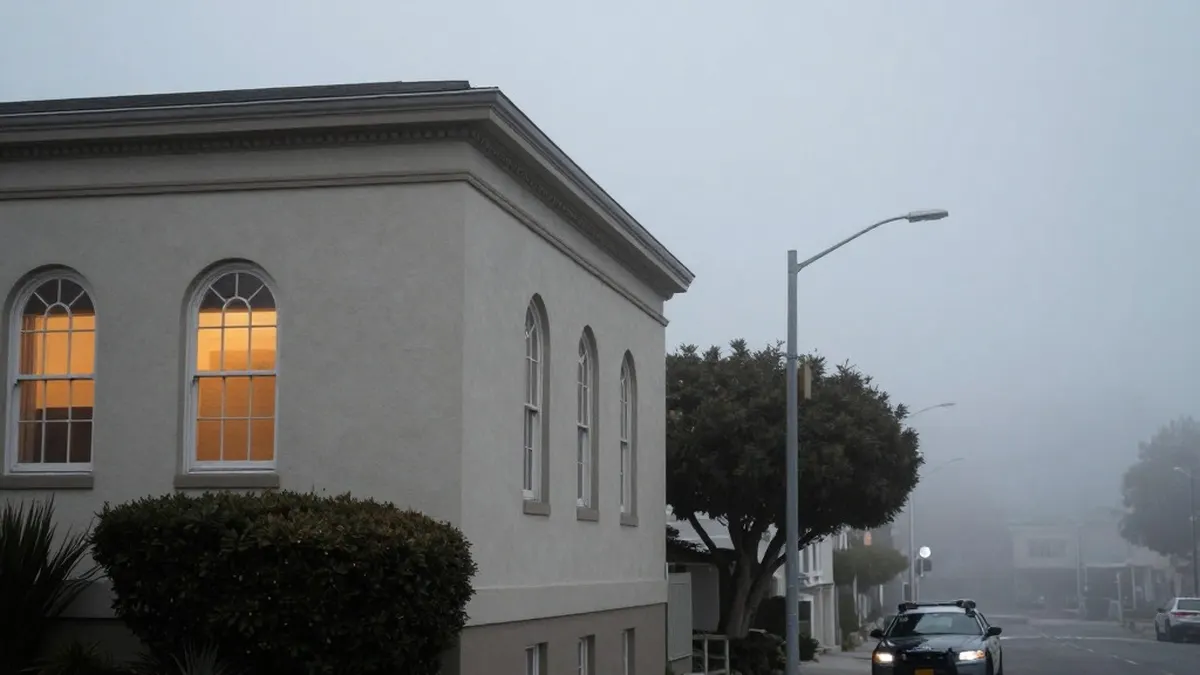
San Francisco is stepping up its use of a California legal tool meant to keep firearms away from people considered dangerous, and the case of a man accused of terrorizing a local synagogue has become its latest test.
Dmitri Mishin, 51, is jailed on allegations that he fired blanks inside the Schneerson Center in the Richmond District on Feb. 1. On Thursday morning, the city will ask a San Francisco Superior Court judge to bar him from carrying a firearm for the next five years by granting a Gun Violence Restraining Order, often called a red flag order.
The request reflects a broader push by the City Attorney's Office. Under a state law that first created the orders in 2016, San Francisco went from three successful petitions in 2019 to 19 in 2022. The city still trails San Diego, which is considered California's model for obtaining such orders. Over the past five years, San Francisco has used the orders to remove more than 50 guns and thousands of rounds of ammunition from dangerous people, including a man who strangled his mother and wished her dead and a road rage driver who held a knife to another person's throat.
Mishin's record includes a string of allegations stretching back to 2011 that never produced a conviction. They range from stealing a flower and throwing a dog bowl at his ex-wife to hitting someone with a stolen flag pole, and also include far more serious accusations of groping a child and stabbing a man. He also appears to have posted Nazi imagery and antisemitic propaganda on social media, including photos that seem to show him in a World War II-era German military uniform.
In June 2021, police say they stopped Mishin near Sea Cliff while he carried a .22 caliber rifle that he described as a movie prop. It turned out to be real, and he handed over a box of ammunition. He claimed he had found the weapon on the street in front of a Chinese restaurant. The reporting officer noted that a mental health evaluation indicated he was not a danger to himself or others, which may explain why no restraining order was sought then. According to the City Attorney's Office, police asked for help obtaining one only after the synagogue incident. A search of his home on Feb. 3 turned up more than 300 rounds of ammunition, a Saiga .308, a replica rifle and handgun, and a broken rifle. The San Francisco Police Department did not respond to requests for comment.
City Attorney David Chiu called Mishin "a textbook example of someone who is a danger to the community and should not have access to firearms." He said that had his office learned of the situation earlier, it would have acted sooner, and that it has trained with police and other agencies in recent months on how to pursue the orders. It remains unclear whether an order will matter while Mishin is in custody.
Officials also hope the case will raise public awareness that anyone, not only public servants, can seek such an order. Neighbors, colleagues and certain other petitioners can ask a judge to issue one against a person who may endanger themselves or others.
Supervisor Catherine Stefani, who authored a 2019 local law requiring police to seek the orders when less restrictive interventions have failed, said the case offers lessons. "What the individuals went through in that synagogue, they never should have experienced," she said.
Rabbi Bentziyon Pil, who leads the Schneerson Center, said a gun ban would have been a logical step given Mishin's violent history, but he and his congregants remain skeptical. They had so little confidence in law enforcement that they initially did not report the shooting to police, and they fear Mishin could be held in a mental institution for only months before release. "People are already scared to come to synagogue," the rabbi said.
Mishin has been jailed since his Feb. 3 arrest and has pleaded not guilty to felony religious terrorism and other charges.
Source: The San Francisco Standard